

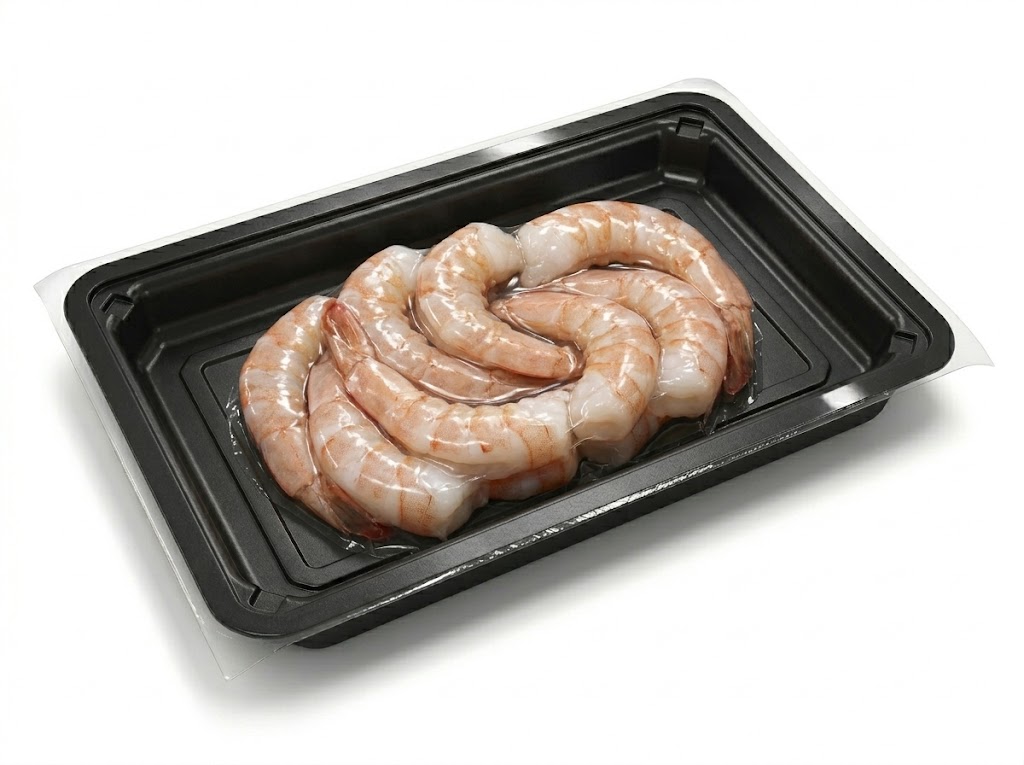
I often see traders lose orders because VSP film looks simple. The problem starts when one film is expected to fit every tray, machine, and food.
Vacuum skin packaging film should be chosen by checking the food product, tray or bottom web, VSP machine, seal layer, film thickness, roll size, and final pack format. I should not treat it as normal vacuum film because skin adhesion, forming, and sealing must work together.
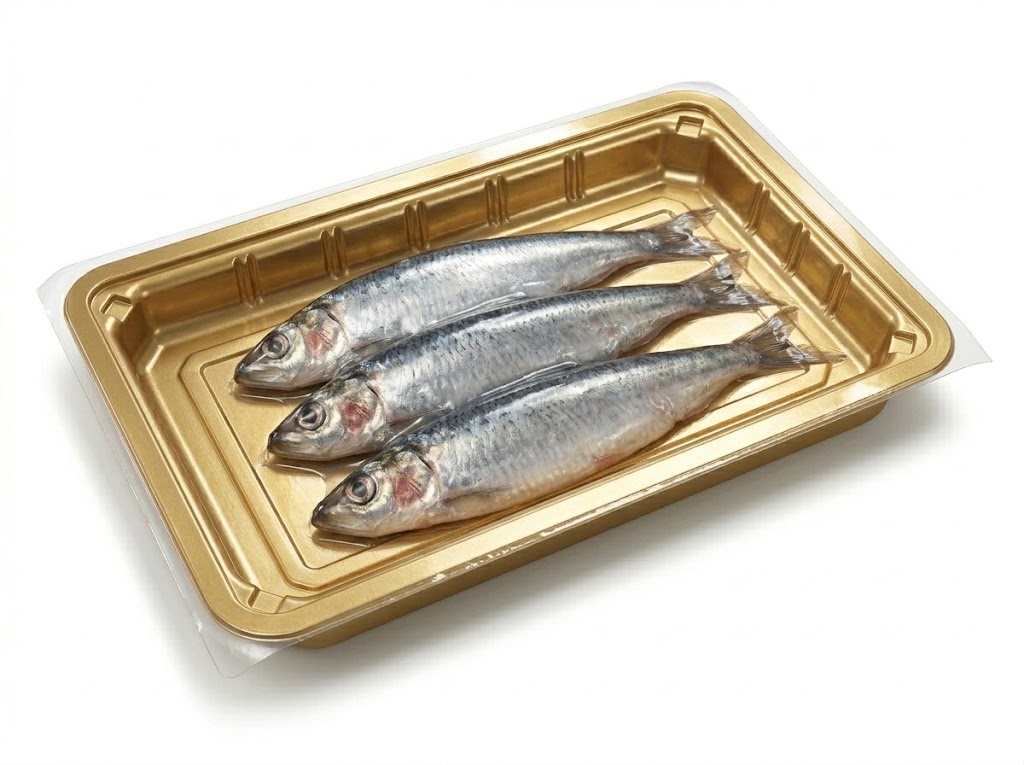
When I receive a VSP film inquiry, I do not start with price. I first ask what the buyer wants the pack to do on the real machine. This step saves time. It also prevents the common problem of sending a film that looks correct on paper but fails during packing.
Why Is Vacuum Skin Packaging Film Not Just Normal Vacuum Film?
I have seen buyers use the word “vacuum film” too loosely. That small mistake can create sealing failure, poor skin effect, and customer complaints.
Vacuum skin packaging film is different because it must heat, form, seal, and cling closely around the food surface. A normal vacuum film may remove air, but it may not create the stable skin-pack effect required by VSP equipment and trays.
In my factory work, I have learned that VSP film selection starts with the whole pack system. The film is only one part. The tray or bottom web is another part. The machine is another part. The food shape is also part of the system. If one part does not match, the result can be unstable.
| Item I Check | Why I Check It | What Can Go Wrong |
|---|---|---|
| Film forming behavior | I need the film to shape over the food | The film may bridge or wrinkle |
| Seal compatibility | I need the film to seal to the tray or web | The edge may leak |
| Skin adhesion | I need the film to hold close to the food surface | The pack may look loose |
| Puncture resistance | I need the film to handle bones or hard edges | The pack may break |
| Machine match | I need the film to run on the customer’s line | The film may fail during trial |
I do not tell a trader that one VSP film can replace every vacuum film. I treat VSP as a special application. I also ask whether the customer uses rigid trays, semi-rigid trays, or flexible bottom webs. This changes the way I think about the seal layer and film structure. In one inquiry I handled, the buyer only sent thickness and width. After I asked for the tray material, I found that the first structure they requested was not a safe choice. That small question helped avoid a costly trial failure.
What Information Should I Give Before Asking for a Quote?
Many buyers ask me for “VSP film price per kg” first. I understand this habit, but price without application details is not useful.
A serious VSP film inquiry should include food type, product shape, sharp edges, machine type, tray or bottom material, thickness, width, roll diameter, seal layer, sample photos, order volume, lead time, and pack format.
%22)
When I prepare a quotation, I need enough detail to judge whether the film can be produced and tested in a practical way. If the inquiry is incomplete, I may still quote a rough price, but that price does not reduce the buyer’s risk. For a food packaging trader, the real danger is not a small price difference. The real danger is selling a film that cannot run well at the end customer’s site.
| Information I Need | Example Question I Ask | Why It Matters |
|---|---|---|
| Food type | Is it meat, seafood, cheese, or ready meal? | Different foods have different surface and shape needs |
| Product shape | Is it flat, tall, oily, wet, or irregular? | The film must form around the product |
| Sharp parts | Are there bones, shells, or hard corners? | I need to consider puncture risk |
| Equipment type | What VSP machine is used? | Film behavior must match machine use |
| Tray or bottom web | What material does the film seal to? | Seal layer selection depends on it |
| Thickness target | What thickness is being used now? | It helps me compare structures |
| Roll data | What width, core, and roll diameter are needed? | It affects slitting and packing |
| Existing sample | Can I see a current film or pack photo? | I can judge the real application faster |
I usually ask for pack photos if the buyer cannot share a film sample. I also ask whether the customer already has a successful film from another supplier. This does not mean I copy blindly. It means I can understand the working benchmark. If I know the current film thickness, tray type, and package result, I can give a more practical recommendation. I also ask about order volume and lead time because production planning matters. A trial roll, a sample order, and a container order are not handled in the same way.
Why Are Thickness and Price Not Enough for VSP Film Selection?
I often hear, “I need 100 micron VSP film. Please quote.” I can quote it, but I cannot know if it will work.
Thickness and price are only basic buying points. They do not show whether the film can form well, seal well, resist damage, and match the buyer’s VSP package format.
Thickness is important, but it is not the whole decision. A thicker film may give better strength in some cases, but it may also change forming behavior. A thinner film may save cost, but it may not handle a sharp food product well. Price is also important, but a low price is not useful if the film creates rejects during packing.
| Buyer Focus | Why It Is Not Enough | What I Add to the Discussion |
|---|---|---|
| Thickness | It does not explain seal match or forming | I ask about tray, machine, and food shape |
| Price | It does not show trial success | I ask about performance needs |
| Width | It only shows roll size | I check package format and machine use |
| Material name | It may be too general | I confirm seal layer and barrier needs |
| MOQ | It matters for buying | I still check whether the film is suitable |
From my side as a co-extruded film producer, I think in layers and functions. But I do not overload the buyer with material terms at the beginning. I first translate the need into simple questions. Does the product have bones? Does the tray need a certain seal layer? Does the film need higher barrier because of the food and distribution plan? Does the buyer need clear appearance? Does the film need to form around a tall product? These are basic questions, but they decide the real direction. I prefer to spend ten minutes asking these questions before quoting. That is faster than fixing complaints after a failed shipment.
What Is the Biggest Commercial Risk for Food Packaging Traders?
A trader may think the risk is buying the wrong specification. I see a bigger risk. The downstream customer may reject the whole supply relationship.
The biggest commercial risk is supplying a VSP film that cannot run reliably on the customer’s machine and package format. The trader may face claims, lost trust, urgent replacement costs, and repeated trial delays.
For a vertical trader, reputation is a large part of the business. The customer does not only judge the film roll. The customer judges whether the trader can solve packaging problems. If the film fails during trial, the trader may need to explain sealing leaks, poor appearance, roll issues, or pack breakage. Some problems may come from the machine, tray, or packing conditions. But the trader still takes pressure because the trader supplied the film.
| Risk Area | What the Customer Sees | What the Trader Feels |
|---|---|---|
| Poor skin effect | The pack looks loose or uneven | The customer questions quality |
| Seal leak | The pack loses vacuum condition | The customer asks for replacement |
| Film breakage | The line stops or rejects increase | The trader pays more service time |
| Wrong roll format | The roll cannot run smoothly | The order becomes urgent trouble |
| Missing application data | The first trial has too many unknowns | The supplier cannot help quickly |
I have seen this risk in sample discussions many times. A buyer may want to move fast because the end customer is pushing. I understand that pressure. But if I skip key checks, I only move the problem to the trial stage. I would rather slow down the first quote and make the inquiry complete. This helps the trader look more professional. It also gives the factory a fair chance to recommend a workable structure. I do not promise that every trial will pass at once. I do promise that a complete inquiry makes the trial more controlled and easier to judge.
How Can Sampling Reduce VSP Film Buying Risk?
Some buyers see sampling as a delay. I see sampling as insurance. It helps both sides find problems before the real order.
Sampling reduces risk because it checks the match between film, food, tray or bottom web, machine, and pack format. A good sample process helps the buyer confirm forming, sealing, appearance, and handling before mass production.
In VSP film projects, I usually first confirm the application information before I recommend a sample structure. I do this because a random sample can create a false result. If the sample is not close to the real need, the trial result may not guide the final order. A sample should answer a clear question. For example, can this film seal to this tray? Can it form over this product shape? Can it handle the roll size and packing format required by the customer?
| Sampling Step | What I Try to Confirm | What I Need From the Buyer |
|---|---|---|
| Application check | I confirm the film direction | Food, tray, machine, and pack format |
| Structure suggestion | I choose a practical trial option | Current sample or target performance |
| Sample production | I make or arrange trial material | Width, thickness, roll data, and quantity |
| Customer trial | The buyer tests on the real machine | Photos, results, and clear feedback |
| Adjustment | I adjust based on real issues | Details of the failure or improvement need |
I do not act as a machine engineer or a food shelf-life laboratory. That is not my role. My role is to help the trader check whether the film inquiry is complete and whether the film structure is reasonable from a production and material point of view. If the customer needs shelf-life data, food safety compliance, or machine tuning, they should use proper testing and qualified technical support. My value is more practical. I can help the trader avoid asking for the wrong film, missing the tray material, or ignoring sharp bones. These simple checks often save more money than chasing the lowest price.
How Should I Compare Suppliers for VSP Film?
Many traders compare only price, MOQ, and delivery. I think those points matter, but they do not show the full supplier value.
I should compare VSP film suppliers by their ability to ask the right questions, judge production feasibility, support sampling, control roll quality, and communicate clearly before the order.
A good VSP film supplier should not rush to say yes to every request. I respect suppliers who ask clear questions because I do the same in my own factory work. If a supplier only asks for thickness and quantity, the quotation may be fast, but the risk stays hidden. If a supplier asks about tray material, seal layer, machine, product shape, roll diameter, and existing samples, that supplier is trying to understand the real job.
| Supplier Ability | Why I Value It | What I Look For |
|---|---|---|
| Inquiry diagnosis | It reduces wrong recommendations | The supplier asks application questions |
| Co-extrusion experience | It supports structure choice | The supplier understands layer functions |
| Sampling support | It lowers trial risk | The supplier can make practical samples |
| Roll control | It affects machine running | The supplier controls width and roll format |
| Honest limits | It prevents false promises | The supplier explains what needs testing |
I also look at communication style. I prefer a supplier who tells me what is known, what is unknown, and what must be tested. This is better than a supplier who promises perfect performance without seeing the real package. For VSP film, I do not believe in blind confidence. I believe in good information, controlled samples, and clear feedback. When I work with traders, I try to be direct. If the inquiry is missing important details, I say it. If the application looks risky, I explain why. This kind of communication may not sound exciting, but it protects the trader’s customer relationship.
What Checklist Should I Use Before Sending a VSP Film Inquiry?
Incomplete inquiries slow down sourcing. They also make factories guess. I prefer to remove guessing before the first quote.
Before sending a VSP film inquiry, I should prepare food details, package photos, tray or bottom web material, machine information, film size, thickness target, seal layer need, sample reference, quantity, lead time, and trial plan.
I use a simple checklist when I discuss VSP film with food packaging traders. This checklist is not complicated. It is only meant to make the first conversation useful. A buyer does not need to know every material term. The buyer only needs to collect the real packaging facts from the end customer. Then the factory can translate those facts into film direction.
| Checklist Item | What I Prefer to Receive |
|---|---|
| Food product | Meat, seafood, cheese, ready meal, or other product |
| Product shape | Flat, tall, irregular, wet, oily, or with sharp parts |
| Packaging format | Tray skin pack or flexible bottom web skin pack |
| Tray or bottom material | Material name, supplier data, or sample photo |
| Machine type | Brand, model, or at least machine photos |
| Film target | Thickness, width, core size, roll diameter, and roll length |
| Seal requirement | Existing seal layer or known sealing material |
| Current sample | Film sample, pack photo, or old supplier specification |
| Order plan | Trial quantity, first order quantity, and yearly estimate |
| Timing | Sample deadline, production lead time, and shipment need |
When I receive this information, I can respond with more confidence. I may still need more details, but the project becomes much easier to judge. I can tell whether the request is close to our production range. I can check whether a 7-layer or 9-layer co-extruded structure may be suitable. I can also see whether the buyer is asking for a film that needs testing before any serious order. This makes the trader look prepared in front of the end customer. It also helps the factory avoid a blind quote that causes confusion later.
Conclusion
I choose VSP film by checking the full package system first. Good information, sampling, and factory communication reduce risk before price matters.
Leave a Reply